
Product overview
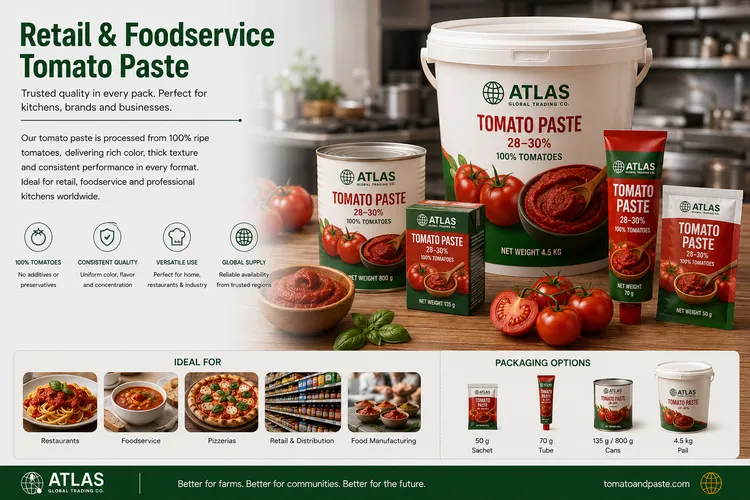
Retail and foodservice tomato paste programs combine the technical requirements of concentrated tomato paste with the packaging, presentation and logistics needs of smaller commercial formats. The product may be intended for supermarket shelves, private-label brands, distributors, restaurants, catering operations or other foodservice channels.
Depending on processor capability, potential formats can include cans, jars, pouches, bag-in-box or other approved commercial configurations. The most appropriate format depends on serving size, handling, dispensing method, shelf-life target, merchandising requirements and destination market.
Atlas Global Trading Co. sources tomato ingredients through a multi-origin network of farms, processors and supply partners. We match the tomato paste and packaging program to the customer’s technical specification, commercial format, label requirements, destination and expected order pattern.
Specification focus
The tomato paste itself can be specified around soluble solids or Brix, process type, consistency, color, pH, acidity, finish and microbiological requirements. Buyers should define these parameters according to the finished use rather than assuming that all retail or foodservice paste performs the same way.
Hot-break or cold-break processing may be relevant where viscosity, tomato flavor or final texture matters. In restaurant or foodservice systems, for example, the paste may be diluted into sauces, soups or prepared foods, while a retail product may need to meet a specific consumer expectation for color, body and flavor.
Pack size and net weight should be considered alongside the technical paste specification. Smaller retail packs may prioritize consumer convenience and shelf presentation, while foodservice formats may be optimized around kitchen usage rate, dispensing, reduced handling and portion economics.
Private-label and branded programs
Private-label projects typically require coordination between the tomato specification, package format, artwork, labeling and production minimums. Buyers should provide the target market, brand brief, required languages, pack size and any retailer-specific standards as early as possible in the project.
Label content, claims and regulatory statements remain subject to the applicable destination-market rules and the final approved product specification. Where organic positioning is required, certification and label claims should be aligned with the selected processor and certification scope.
Packaging and case configuration
Potential formats include cans, jars, pouches and bag-in-box, subject to origin, processor capability, label brief and minimum production run. Buyers may also need to define case count, carton dimensions, pallet pattern, barcode requirements and any retailer or distributor-specific logistics standards.
Packaging selection can influence freight efficiency, storage, dispensing and product utilization. For foodservice operations, a practical pack should match consumption rate closely enough to limit unnecessary product exposure after opening.
Shelf life and handling
Shelf-life expectations should be reviewed against the selected product, process and packaging system. Unopened shelf life, storage temperature and handling conditions are confirmed through the approved technical and commercial program.
Once opened, storage and use instructions can differ from the unopened product. Foodservice buyers should therefore consider refrigeration, resealing, dispensing and expected usage rate when selecting the most suitable commercial pack.
Typical applications
- Retail and consumer-ready tomato paste
- Foodservice kitchens and catering
- Private-label supermarket programs
- Restaurants and restaurant groups
- Food distributors and wholesalers
- Institutional and hospitality supply
Commercial planning
Retail and private-label projects often require more lead-time coordination than bulk ingredient programs because packaging materials, artwork approvals and minimum production runs can affect scheduling. Providing forecast volume and target launch timing helps narrow the most practical production pathway.
For distributor and foodservice projects, expected order size, annual volume and inventory strategy can help determine whether a standard producer pack or a customized program is more economical.
Organic and conventional programs
Where organic supply is requested, we confirm the product’s certification scope and supporting documentation for the selected origin, processor and supply lot. Packaging and labeling requirements should also be coordinated with the intended organic claim and destination market.
Conventional programs can be optimized around technical performance, pack format, labeling, economics, origin and continuity of supply. Exact specifications, available packaging and minimum production quantities are confirmed during quotation.